

Can Sodium Metaaluminate Liquid react with metals?
Sep 05, 2025
Hey there! As a supplier of Sodium Metaaluminate Liquid, I often get asked some pretty interesting questions. One that keeps popping up is, "Can Sodium Metaaluminate Liquid react with metals?" Let's dive right into this topic and break it down in a way that's easy to understand.
First off, let's talk a bit about Sodium Metaaluminate Liquid. It's a chemical compound with a wide range of applications. You can find 37% Concentration Of Sodium Metaaluminate in various industries, and it's also used as an Sodium Metaaluminate for Accelerator. The compound with the CAS number 11138-49-1 Sodium Metaaluminate is what we're dealing with here.
Now, back to the question at hand. Whether Sodium Metaaluminate Liquid can react with metals depends on a few factors. One of the key things is the nature of the metal itself. Some metals are more reactive than others, and that plays a big role in how they interact with Sodium Metaaluminate Liquid.
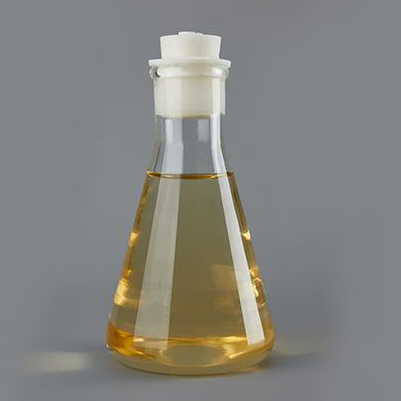

Let's start with the more reactive metals. Metals like aluminum, zinc, and magnesium are known to be quite reactive. When these metals come into contact with Sodium Metaaluminate Liquid, a chemical reaction can occur. For example, aluminum is amphoteric, which means it can react with both acids and bases. Sodium Metaaluminate Liquid is basic in nature. When aluminum reacts with it, the following reaction can take place:
2Al + 2NaAlO₂ + 4H₂O → 2Na[Al(OH)₄] + 3H₂↑
In this reaction, aluminum reacts with Sodium Metaaluminate and water to form sodium tetrahydroxoaluminate and hydrogen gas. This is a pretty significant reaction, and it shows that reactive metals can definitely interact with Sodium Metaaluminate Liquid.
Zinc also has a similar reaction. It can react with the basic medium of Sodium Metaaluminate Liquid to form zincate ions and hydrogen gas. The reaction is as follows:
Zn + 2NaAlO₂ + 4H₂O → Na₂[Zn(OH)₄] + 2Al(OH)₃ + H₂↑
This reaction shows that zinc is also capable of reacting with Sodium Metaaluminate Liquid under the right conditions.
Magnesium, on the other hand, is a bit different. It's not as reactive as aluminum or zinc when it comes to reacting with Sodium Metaaluminate Liquid. However, in the presence of heat or other catalysts, a reaction can still occur. Magnesium can react with the hydroxide ions in the solution, which are present due to the basic nature of Sodium Metaaluminate Liquid.
Now, let's talk about less reactive metals. Metals like copper, silver, and gold are much less likely to react with Sodium Metaaluminate Liquid. These metals have a relatively low reactivity, and they don't easily give up their electrons to participate in chemical reactions. For example, copper is quite stable in a basic solution like Sodium Metaaluminate Liquid. It won't readily react unless there are some very specific conditions, like the presence of strong oxidizing agents or high temperatures.
Silver and gold are even more resistant to reactions. They are known as noble metals, and they have a very high resistance to corrosion and chemical reactions. In most cases, you won't see any significant reaction between these metals and Sodium Metaaluminate Liquid.
The reaction conditions also play a crucial role. Temperature, concentration of the Sodium Metaaluminate Liquid, and the presence of other substances can all affect whether a reaction occurs. For example, increasing the temperature can speed up the reaction rate. If you heat up a mixture of a reactive metal and Sodium Metaaluminate Liquid, the reaction will likely proceed more quickly.
The concentration of the Sodium Metaaluminate Liquid is also important. A higher concentration means there are more reactant molecules available, which can increase the likelihood of a reaction occurring. However, if the concentration is too high, it can also lead to other issues, like precipitation or the formation of unwanted by-products.
Another factor to consider is the presence of other substances in the solution. For example, if there are impurities or other chemicals present, they can either promote or inhibit the reaction. Some substances can act as catalysts, which speed up the reaction, while others can act as inhibitors, slowing it down or preventing it altogether.
So, in conclusion, Sodium Metaaluminate Liquid can react with some metals, especially the more reactive ones like aluminum, zinc, and magnesium. However, less reactive metals like copper, silver, and gold are much less likely to react. The reaction depends on a variety of factors, including the nature of the metal, the reaction conditions, and the presence of other substances.
If you're in an industry where you need to use Sodium Metaaluminate Liquid and you're worried about its reaction with metals, it's important to do some testing first. You can conduct small-scale experiments to see how different metals interact with the liquid under your specific conditions.
If you're interested in purchasing Sodium Metaaluminate Liquid for your business, we're here to help. We offer high-quality products with different concentrations and specifications to meet your needs. Whether you need it for an accelerator or other applications, we've got you covered. Just reach out to us, and we can start a conversation about your requirements and how we can supply the right product for you.
References:
- General Chemistry textbooks
- Chemical reaction databases
So, that's all for today's blog. I hope this has cleared up any questions you had about whether Sodium Metaaluminate Liquid can react with metals. If you have any more questions, feel free to leave a comment or get in touch.